Three Signs a Tree Needs Removing, Not Just Trimming
How to tell the difference between a tree that needs a haircut and one that needs to come down.
September 8, 2026 · 4 min read
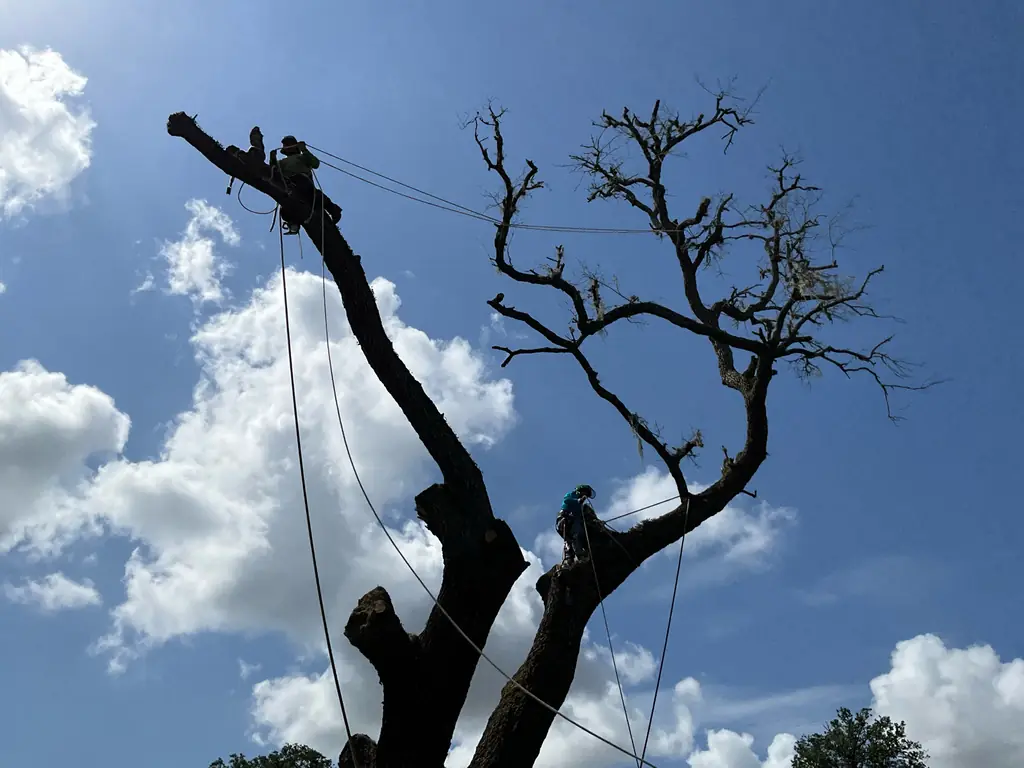
Most trees just need attention. A round of thinning, some deadwood cleared out, a shape correction, and they're fine for another few years. But every so often we walk a backyard in Houston and the answer isn't a trim, it's a removal. Homeowners hate hearing that, and we get it. A mature oak took decades to grow and it's usually the reason the yard looks the way it does. We don't recommend removal lightly. When we do, it's because we've seen these three things up close, and they don't get better with a trim.
1. Dead wood spreading through the upper canopy
A few dead branches here and there is normal, especially after a dry stretch. What worries us is when the dieback is spreading upward and outward year over year, not staying contained to one limb. That usually means the root system or the trunk itself is losing the ability to feed the whole tree. Trimming out the dead wood buys a season, maybe two, but if the cause is underneath the bark or below the soil, cutting the symptoms off the top doesn't fix what's driving them.
2. A lean that wasn't there before
Trees lean. Plenty of healthy trees grow at an angle their whole lives, reaching for light, and that's not automatically a problem. What we pay attention to is a lean that's new, or one paired with cracked or lifted soil at the base on the opposite side. That combination usually means the root plate is starting to let go, which is a structural issue no amount of canopy trimming can correct. If a tree with a fresh lean is anywhere near a house, driveway, or fence line, we treat it as urgent, not routine.
3. Cavities, sloughing bark, or fungus at the base
A hollow spot you can knock on and hear an echo, bark that's peeling away in sheets rather than shedding naturally, or mushroom-like fungus growing out of the trunk or root flare are all signs of decay working from the inside. Some species tolerate a surprising amount of internal decay and stay standing for years. Others don't. Our crew looks at the species, the extent of the decay, and what's within falling distance before making a call, since the same finding can mean two different things depending on the tree.
- Dead branches spreading higher in the canopy each year, not staying put
- A trunk lean that's new, or soil lifting or cracking at the base
- Cavities, peeling bark, or fungus growing from the trunk or roots
- Large limbs already failing during ordinary wind, not just storms
- Significant canopy loss with no new growth the following spring
Why this call shouldn't be made from the ground
Here's the part homeowners don't always expect: the same finding can mean two completely different things depending on the species, the tree's age, and what's actually near it. A cavity in one species might be nothing to worry about for years. In another, it's a much bigger deal. That's why we don't hand out a removal recommendation over the phone from a description. Someone from our crew walks the yard, looks at the tree from more than one angle, and checks what a photo or a quick glance from the driveway would miss, like soil movement at the base or decay that's only visible once you're close.
What removal actually looks like
When removal is the right call, we don't just drop the tree and hope for the best. Our crew evaluates the site first: what's around it, what's underneath it, and how much room there is to work with. Sections get lowered on rope rather than felled whole whenever there's a structure, fence, or garden bed in range, and we bring in a crane on the jobs where access earns it. We lay protective mats to keep the yard and any hardscaping intact, and we haul all the debris off site when we're done. That kind of controlled, section-by-section approach takes longer than simply felling a tree in one piece, but it's the only way to safely bring down a compromised tree in a yard that isn't wide open on every side.
The stump is a separate decision entirely, and one you don't have to make on the same day. Some homeowners want it ground out immediately so the yard reads as finished. Others want time to decide what goes in that spot next, whether that's a new tree, a garden bed, or just grass again. Either way, a removal crew leaving a clean, level site behind is just as important as the cut itself.
When in doubt, get a second look
If any of this sounds familiar, don't wait for a Houston storm to make the decision for you. Tree Care Professional has been assessing yards across Houston and the surrounding towns since 2001, and every visit starts with a free on-site estimate, no pressure either way. Sometimes the answer really is just a good trim. When it isn't, you'll hear exactly why, in plain language, before anyone picks up a saw.
Tree Care Professional — (281) 704-6828
Call (281) 704-6828More articles
Why Regular Tree Trimming Matters in Houston's Humidity
Fast growth and thick canopies are great for shade, until wind, weight, and moisture turn them into a problem.
Pruning for Healthier Growth: Why Late Winter to Early Spring Works Best in Houston
The right cut at the wrong time of year still stresses a tree. Here's why the calendar matters.